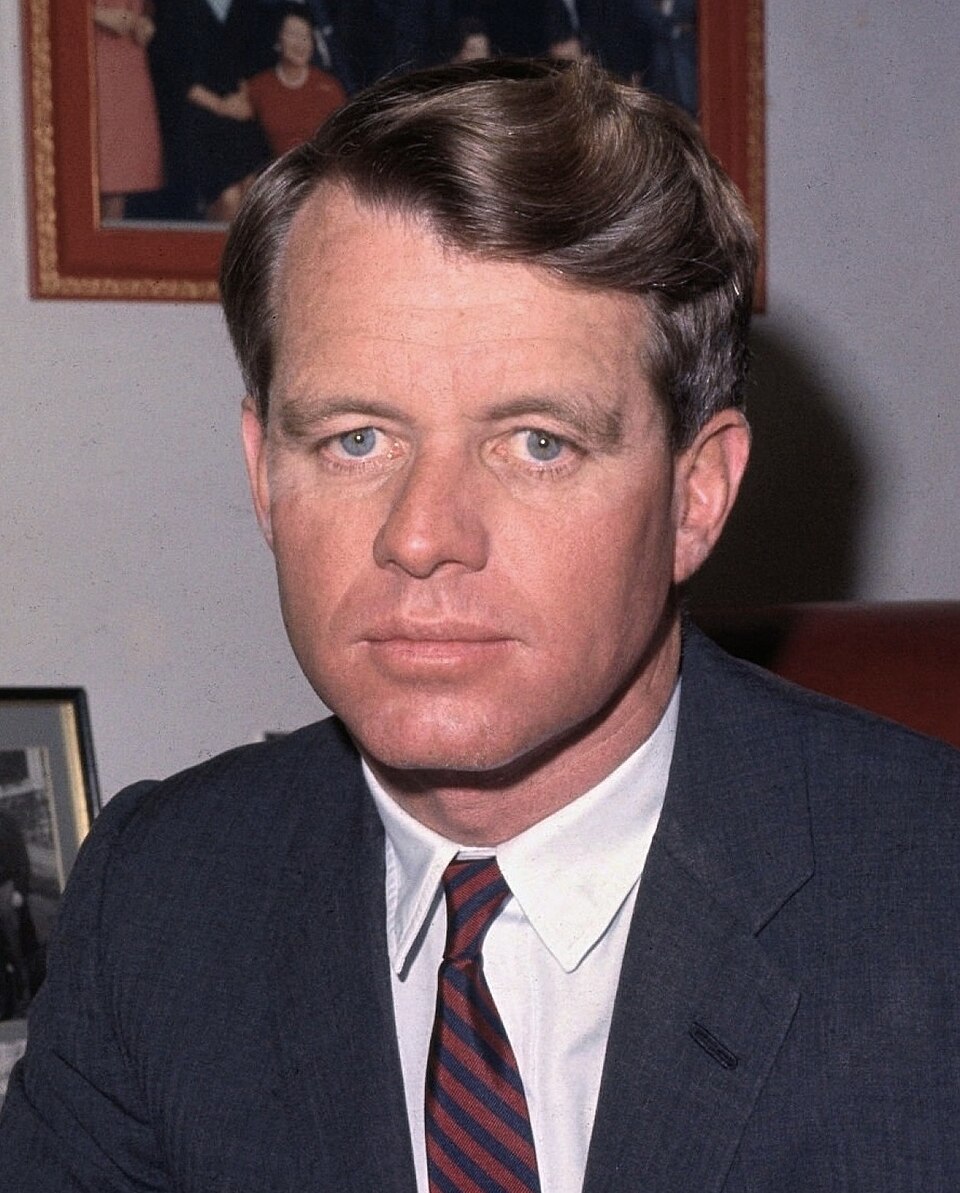
In the tumultuous landscape of 1960s America, few figures captivated the nation's imagination and hope quite like Robert F. Kennedy, affectionately known as Bobby Kennedy or RFK. His trajectory from a fiercely loyal political operative to a compassionate voice for the marginalized, and ultimately a presidential candidate, left an indelible mark on the country's conscience. This article delves into the core tenets of RFK's legacy: his transformative role in the Civil Rights movement, his evolving and powerful opposition to the Vietnam War, and the poignant, tragically cut-short campaign of 1968.
Robert F. Kennedy's Early Life and Ascent to Power
Born Robert Francis Kennedy on November 20, 1925, in Brookline, Massachusetts, Bobby Kennedy was the seventh of nine children in the famously influential Kennedy family. His upbringing instilled in him a strong sense of duty and a competitive spirit that would define his public life. After serving in the U.S. Navy during World War II, Kennedy pursued higher education, earning a degree from Harvard University in 1948 and a law degree from the University of Virginia in 1951. His early career was deeply intertwined with his elder brother, John F. Kennedy (JFK), whose political campaigns he shrewdly managed, demonstrating an exceptional aptitude for strategy and organization.
This close alliance culminated in his appointment as the 64th United States Attorney General, serving from 1961 to 1964 during President Kennedy's administration. As Attorney General, Bobby Kennedy was far more than a legal administrator; he was often considered his brother's closest advisor and a key operational force within the administration. This period saw him grappling with critical national and international issues, laying the groundwork for his later, more independent political identity. His time as AG proved to be a crucible, shaping his understanding of justice, power, and the profound challenges facing the nation.
A Champion for Civil Rights and Social Justice
RFK's tenure as Attorney General marked a pivotal shift in his political identity and his profound impact on the Civil Rights movement. Initially perceived by some as a pragmatic enforcer of the law, his direct encounters with racial injustice and his growing personal empathy transformed him into one of the movement's most vocal and active champions. Kennedy understood that the struggle for civil rights was not merely a legal battle but a moral imperative for America.
- Direct Intervention: As Attorney General, he moved beyond rhetoric, using the full power of the federal government to confront segregation. He famously deployed federal marshals to protect the Freedom Riders as they faced violent mobs in the South and to ensure the enrollment of James Meredith at the University of Mississippi and Vivian Malone and James Hood at the University of Alabama.
- Legal Prowess: Bobby Kennedy vigorously pursued voting rights cases and pushed for stronger civil rights legislation, recognizing that legal frameworks were essential to dismantle systemic discrimination. He played a crucial role in drafting and advocating for what would become the landmark Civil Rights Act of 1964.
- Personal Engagement: Perhaps most significantly, RFK's commitment deepened through personal interaction. He traveled extensively to meet with civil rights leaders, impoverished communities, and marginalized groups—from Native Americans on reservations to migrant farmworkers and urban poor. These firsthand experiences fostered a deep understanding of their struggles and galvanized his belief that government had a moral obligation to lift up the disadvantaged.
- Empathy as a Political Tool: Kennedy's approach underscored the power of empathy in leadership. He demonstrated that true policy change often begins with understanding the human cost of inequality, inspiring many to consider the social implications of their actions and policies.
His advocacy for social justice extended beyond racial equality to a broader concern for poverty and human dignity, making him a compelling voice for a more inclusive and equitable America.
The Shifting Tides: Vietnam War Opposition
Another defining aspect of Bobby Kennedy's legacy was his evolving and increasingly outspoken opposition to the Vietnam War. As Attorney General, he was part of an administration that initially escalated U.S. involvement, but following his brother's assassination and his own deep reflection, his views underwent a significant transformation.
From Internal Doubt to Public Dissent
Kennedy's initial reservations about the war grew into a profound moral and strategic critique. He saw the conflict as a quagmire, draining American lives and resources without a clear path to victory. He argued that the war was not only unwinnable in its current form but was also diverting critical attention and funds from pressing domestic issues, particularly the fight against poverty and inequality he championed.
His public criticism placed him at odds with President Lyndon B. Johnson's administration and many within his own Democratic Party. Despite the political risks, RFK chose to speak out, believing it was his duty to challenge a policy he saw as morally bankrupt and strategically flawed. He called for a negotiated settlement, recognizing the need for a political solution rather than a purely military one.
This shift cemented his image as a leader willing to question the status quo, even when unpopular, and to prioritize human life and social welfare over political expediency. His stance resonated deeply with a growing anti-war movement and foreshadowed the national disillusionment that would soon follow.
The Hope and Heartbreak of the 1968 Presidential Campaign
The year 1968 was one of profound upheaval in America, marked by political assassinations, widespread unrest, and deepening divisions over civil rights and Vietnam. It was against this backdrop that Bobby Kennedy launched his presidential campaign, a movement infused with both immense hope and ultimately, profound tragedy.
After initially hesitating, RFK announced his candidacy in March 1968, spurred by Senator Eugene McCarthy's surprisingly strong performance against President Johnson in the New Hampshire primary. Kennedy's platform was a powerful blend of his core convictions: an end to the Vietnam War, a renewed commitment to civil rights, and an aggressive fight against poverty and inequality. He spoke passionately about "the two Americas"—one affluent and one desperately poor—and vowed to bridge that divide.
Bobby Kennedy's campaign was characterized by his extraordinary ability to connect with people from all walks of life. His charismatic personality, direct communication style, and genuine empathy resonated deeply with diverse audiences, particularly young people, minorities, and the economically disadvantaged. He campaigned tirelessly, often immersing himself in crowds, shaking hands, and listening intently to the concerns of everyday Americans.
One of the most iconic moments of his campaign occurred on the night of April 4, 1968, when he delivered an impromptu, moving speech in Indianapolis, informing a predominantly African American crowd of Martin Luther King Jr.'s assassination. His powerful words, drawing on his own experience of loss, are credited with helping to quell potential riots in the city, standing in stark contrast to the unrest that erupted in many other urban centers.
Kennedy's campaign gained significant momentum, achieving key primary victories. His triumph in the crucial California primary on June 5, 1968, appeared to open a viable path to the Democratic nomination. However, just moments after his victory speech, his journey, and indeed his life, were tragically cut short by an assassin's bullet. His death sent shockwaves across the nation, silencing a voice that had come to symbolize hope and unity during a period of intense fragmentation.
Conclusion
Bobby Kennedy's legacy is a complex tapestry woven with threads of conviction, compassion, and courage. Though his political career was tragically brief, his impact on American society and politics endures. He emerged as a powerful advocate for civil rights, demonstrating that justice demands active engagement and unwavering commitment. His evolution on the Vietnam War showcased a leader willing to challenge prevailing orthodoxies and prioritize human costs over political convenience. And his 1968 presidential campaign, though unfinished, remains a powerful testament to the politics of hope, unity, and social justice.
RFK's calls for an equitable society, a foreign policy rooted in peace, and a government responsive to the needs of all its citizens continue to resonate, offering timeless lessons on leadership and the pursuit of a more just and compassionate world. His life serves as a poignant reminder of the transformative power of empathy in public service and the enduring dream of an America that truly lives up to its ideals.